Saturday, August 9, 2014

What we'll miss - and not miss - about Thailand.

We can't say that Thailand was our favorite country out of the 13 we've visited so far, but we (mostly) enjoyed our two months of exploring. As predicted, we preferred the north to the south; the western part of the northern Mae Hong Son loop was definitely a highlight.

Here are a few things we'll miss about this well-traveled spot in SE Asia...

The diversity. Not just the ethnic diversity - which we really appreciated, from the hilltribes in the north to the Burmese border towns - but also the more subtle diversity you probably wouldn't notice coming straight from Big City, USA on holiday. We came from Vietnam and Lao so we noticed. Men with straggly long hair and beards, women with stylish pixie cuts. Tattoos, gangsta clothes, Metallica t-shirts. Sleeveless tops and above-the-knee skirts. Ladyboys, tomboys. Country line-dancing instead of karaoke. That sort of thing. It was nice.

The water refilling systems. You can't drink the water anywhere in SE Asia and we cringe when we think about how many plastic bottles we've gone through since March. We try to buy the giant 5-liter jugs when we'll be in a town for more than a night or two, just to save on plastic. But Thailand has this neat system where you can refill used plastic bottles with purified water for a fraction of the cost of a bottle of water at the store.

really great... when they work

They're usually in neighborhoods or otherwise off the tourist path so you kind of have to be "in the know" to find them. We only ran across a handful of machines and we were only successful in using one (another was broken, other times we were leaving town and didn't need to cart 5 liters of water with us), but just the fact that they exist made us happy.

The cultural pride. Not just hilltribe cultures - which we loved learning about - but Thai culture in general. Several cities played the national anthem over loudspeakers at 6pm sharp, resulting in that weird sci-fi "pause" in activity as people stood at attention. Thai museums and historic sites proudly told of their country's heritage (usually in English, sometimes in reeeeeally greeeeeat deeeeetail).

And Thai people love their king! The guidebooks warn you to never speak badly of His Majesty. Monuments and ginormous photographs of past and present kings are everywhere, and every city seems to have at least one main street named after a past or present king.
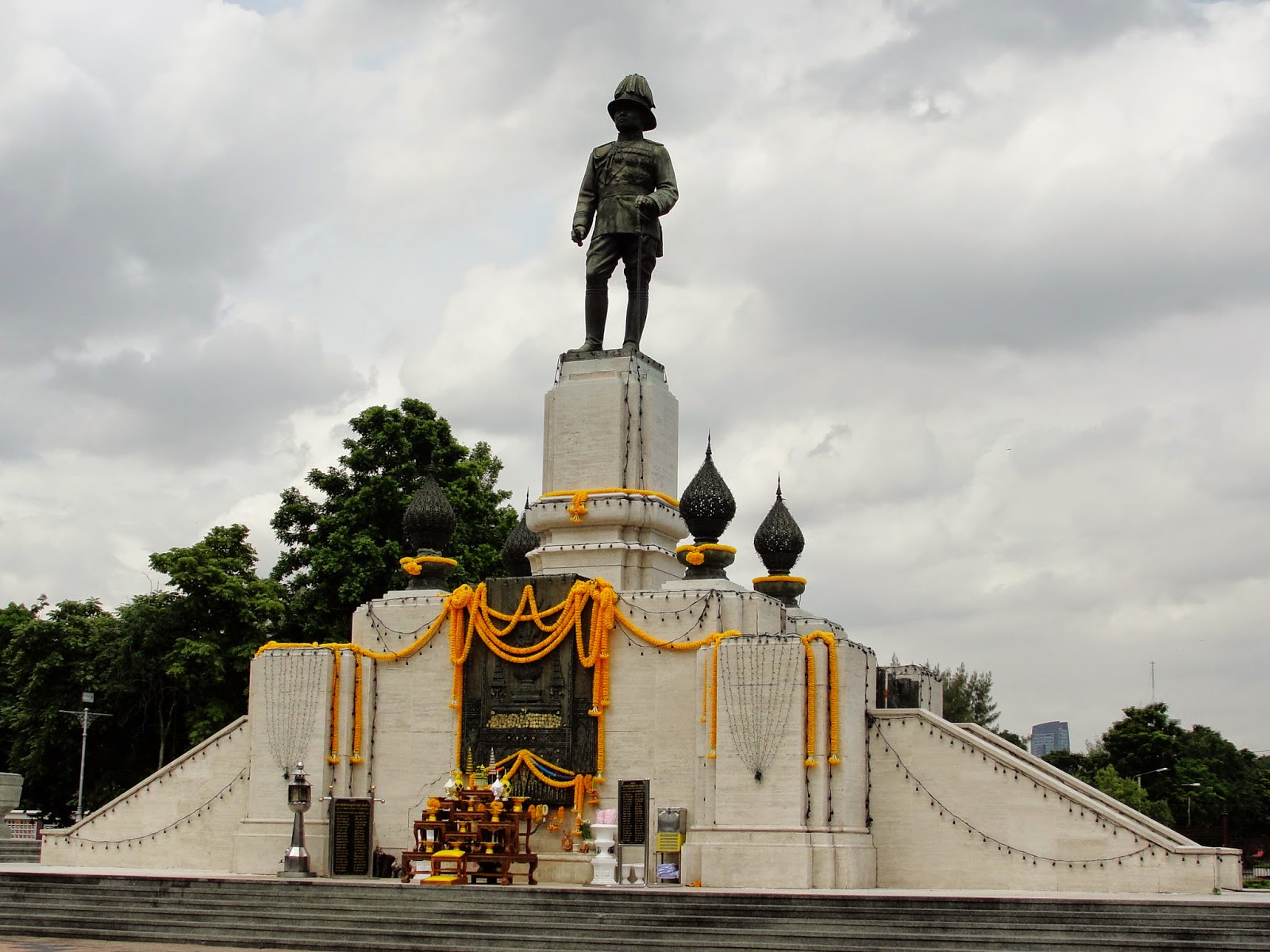
ribbons and flowers almost always accompany

even memorialized on farang-o-rama Koh Tao

Bus drivers would honk as they passed monuments and passengers would stop mid-conversation to turn and bow their heads. Yep, they love their king.

The public transportation. It was so easy to get everywhere. The bus and train stations had clear signage, the roads were paved, the rides were pretty smooth, and we were never on a bus or train that was overbooked.

Mae Hong Son's clean, clearly marked bus station

even the 5-hour songtheaw to Mae Sot was perfectly fine

The comfortable feel. The street art, the abstract sculptures, the modern buildings, the 7-11s, the cars and traffic signals, the widespread availability of peanut butter... Everything felt familiar.

In addition to comfortable "stuff", Thailand is used to westerners. In both big cities and small towns we were generally ignored so we never felt like tourists. Communication was easy no matter where we were. I even - GASP! - stopped wearing my money belt in Thailand. This comfortable feeling contributed greatly to our lull and it's really easy to see why so many westerners flock to Thailand over other less "comfortable" SE Asian countries.

Which brings us to five things we didn't really like about Thailand. Like I said, we (mostly) enjoyed our two months but it definitely wasn't our favorite country. Here are a few things we won't miss...

The farangs. So many westerners flock to Thailand! And on parts of the route we traveled it seemed like so many did so looking for cheap drugs, cheap sex, cheap beer - cheap everything. At one point (I think it was around Pai) I said I wanted to go somewhere where young white guys weren't looking to score opium and Patrick replied, "so we're leaving Thailand, then?" And let's not forget everyone's favorite taboo subject, the creepy old white men... Main drags in places like Chiang Rai, Chiang Mai, Pai, Kanchanaburi, Koh Tao, and Bangkok were definitely the worst in all of these regards.

exhibit A, Kanchanaburi
(10b is like, US$0.30)

exhibit B, Bangkok
(good thing, too,
because Patrick's license has expired!)

exhibit C, Bangkok
(I don't care how you translate it,
it's just wrong)

Once we got off the main drags and farther west into less-traveled territory, things quieted down significantly.  We tried to do that as much as possible.

We also saw and heard of many farangs settling down in Thailand to take advantage of the favorable cost of living. It's hard to imagine people moving to a new place and not learning the local language, not engaging with the local community, and constantly bad-mouthing their new home - but it happens.  We don't get that.

The pad thai. It was all so bland.

the best pad thai we ate was in Lao

the best Thai food we ate was Burmese food

The dogs. Stray dogs everywhere. The majority didn't bother us, but they were often covered in scabs and/or mange and/or had clearly just had several puppies. It was sad. We did get rushed by a few dogs too, luckily with no bad outcome. I'd read one too many blog posts about someone getting bit in Thailand and we weren't really interested in testing our health insurance on rabies shots at the local hospital.

The national parks. Granted, we didn't visit many, but the ones we did visit had very few hiking trails and seemed to be more about land preservation. We're all for that, but we wanted to hike!

the trail guide dog was the only wildlife we saw
on the only trail we hiked - and it was only a 2km trail
(Salawin National Park, Mae Sariang)

The "anywhere" feeling. Yes, we liked the comfortable feel but on the other hand, everywhere could have been anywhere.  Big cities felt familiar, small towns were easily maneuvered.  Koh Tao felt like any Florida beach during spring break (or so we've heard). I remember motorbiking through windy hills in Mae Hong Son and suddenly feeling like I was in rural Maryland.

aside from the whole
"drive on the left" thing of course

Mae Sot was the only town where we felt out of place, and it was a good feeling.

Other people probably prefer having the "anywhere" feeling as a good feeling. Other people probably really like the beaches and shopping at the markets too. That's cool - we all travel our own ways. Getting out there and doing it is the important part.

Now we're in Siem Reap, Cambodia with a different kind of out-of-place feeling. We'd like to say it's a good feeling but so far it's been a bit like Marrakesh in that everyone wants to sell you something, only here the people are much nicer about it and you know they actually need your money. Once we get out of here I'm sure we'll love the country as much as everyone else does...
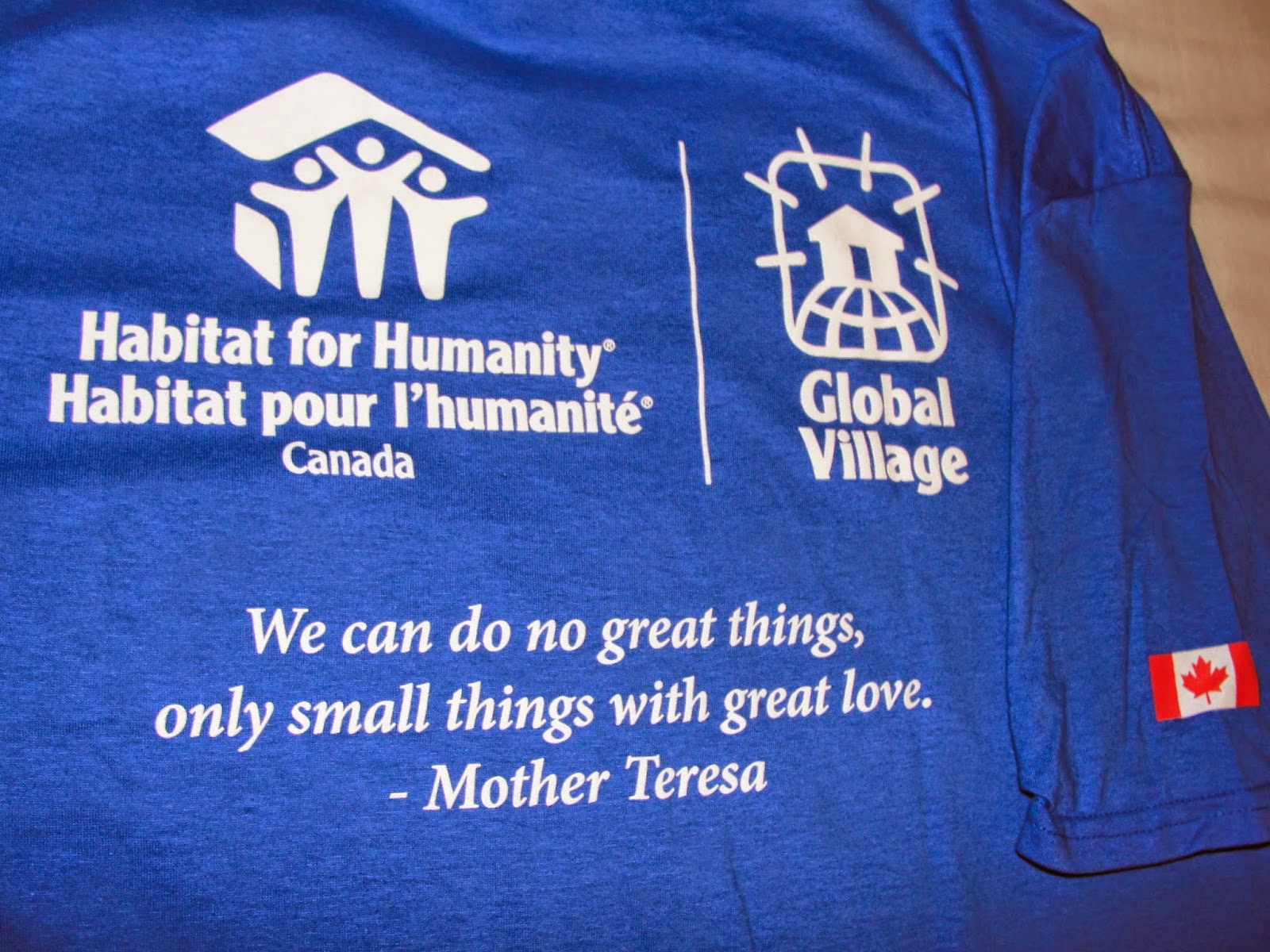
It's finally time for our Habitat for Humanity Global Village build!

We've already talked about why we wanted to do a Global Village build somewhere along this journey. Many of you made that happen through your donations to our originally planned Bangkok Global Village build. Unfortunately, Thailand decided to have a coup and our Bangkok build was cancelled. (Have we said "coup schmoup!" lately?)

Fortunately, we found a new build with a great Global Village team in Cambodia that fit our travel schedule perfectly. After many weeks of planning (while sightseeing around Thailand - coup schmoup!), we're excited to announce that our Global Village build starts on Monday!

our t-shirts are in!
time to brush up on our Canadian...

Now it's time to share a little more about HFH Cambodia and - most importantly - the families we'll be helping in the coming week.

About HFH Cambodia...
HFH Cambodia's basic principals are essentially the same as other affiliates worldwide - decent, affordable housing as a foundation to break the poverty cycle; dignity for all through a commitment to housing as a basic human right; and positive and lasting social, economic, and spiritual change within communities as a success measure.

Of the four SE Asia countries we've visited, the last principal of positive and lasting social, economic, and spiritual change applies most prominently to Cambodia. While the country continues to slowly recover from Pol Pot's horrific regime in the 1970s, the impacts of the Khmer Rouge are still evident. In 2004 a third of Cambodia's 15 million citizens lived under the national poverty line, surviving on less than $1.25/day. Harsh times continued later in the decade. "The 2008 food crisis, and the economic crisis of 2009, severely affected the population, especially children, and led to a rural exodus."*

As is true everywhere, rural families moving to the city usually don't have specific skills and/or education, and therefore have a hard time securing regular income. This is especially true here. The "rural exodus" several years ago had "severe consequences for vulnerable poverty line families - they relocated to unserviced remote areas, became scavengers living in rental shacks at high risk of eviction, many were infected or affected by HIV/AIDS, enduring these and a great many other perils - predominantly in the capital city of Phnom Penh." Then, in 2009, Phnom Penh closed the Steung Meanchey dumpsite which forced families that depended on scavenging there to move to even worse living conditions.

As is also true everywhere, stable and safe living conditions promote good health for the family and increase likelihood that children will attend school and be successful. "Since 2004, HFH Cambodia has built over 2000 houses and served over 9000 families through housing, community development, and water, sanitation and hygiene projects in Phnom Penh, Siem Reap, Kandal, Takeo, Prey Veng and Battambang." (As you can see, housing is just one aspect of HFH Cambodia's mission - we'll be sharing information about these other projects over the next week.)

Meet the families (shared with permission from HFH Cambodia)...
We will be building under the affiliate's New Start and New Life Project, which aims to improve the quality of life for orphans/vulnerable children and people living with HIV/AIDS. We'll be helping two families during our short week:
  • Som Sam Oul (45 years old) and her husband, Touch Chan Thou (age 50), live with two of their four children (Pheng Kea, age 21 and Pheng Toun, age 19). Both she and her husband have tested positive for HIV. Her husband is no longer able to work so Som Sam Oul works long hours at the water company to support the family. Som Sam Oul is so happy that Habitat will enable her children to have a home for many years. "Having a house it means having a new life and a new place for my family."
  • Nov Thary (34 years old), a single mom living with her two sons, Mon Samuth (age 7) and Mon Makara (age 3). The family currently lives in a house that leaks and floods, especially during the monsoon season, making it difficult to sleep. The family has to constantly move between friends' houses in order to stay dry. Thary can't afford her current rent and utilities and gets little support from her ex-husband. She's so excited about the opportunity Habitat brings to their family: "HOME is a decent shelter and a big dream for my family..."
Like many Habitat partner families around the world, HFH Cambodia families repay mortgage loans based on their income. Here, average mortgage payments are US$22/month over a period of about five years. Not only does this US$22/month invest in present security and safety, it builds future family stability - it is not uncommon in Asia for children to live with parents after they are married, and houses are commonly family property that pass down through generations.

So what does a family get for their investment? "A HFH Cambodia house is usually 31.5m2 (339f2). Traditionally, houses have been built using fired bricks or wood, but HFH Cambodia is experimenting with stabilized soil brick technology to offer our home partners a more economical, environmentally friendly housing solution. The standard house design includes a living room, a bedroom and a kitchen with a toilet." (Remember that a "bathroom" is a "toilet" everywhere else in the world!)

In addition to these building methods, HFH Cambodia is trying a new wooden house design and our team gets to help test it out!  Here's a sneak peek:

Habitat Cambodia wood house model

More to come...
We'll be posting more about our experience here and on our Facebook page so check back often... And please note that "HFH Cambodia strategically plans to serve 125,000 families by 2018." A pretty tall order - if you'd like to help, you can donate here.

Speaking of donating, HUGE thanks to all who donated to our original Bangkok build! And thanks to everyone who supports us in this endeavor through your emails, comments, "likes" and good thoughts. We appreciate it more than you know. So does Habitat!

*Anything in quotes is taken directly from our volunteer manual.

Monday, August 4, 2014

Every-day-is-Friday five: surprisingly enjoyable days in Bangkok.

We were really dreading Bangkok. We pictured crammed streets lined with skyscrapers on either side, a NYC-like parade of people at every intersection, smog, mass consumerism... We put Bangkok off until the last possible minute, also known as days 55-59 of our 60-day visa. We even visited places we probably wouldn't have visited just to prolong the inevitable.

But it was totally fine. In fact, we really kinda liked it.

reminiscent of Ho Chi Minh City

We only saw a tiny little corner of the city during our stay. The public transit system is pretty good but we mostly walked or took the boat taxis up the river, which limited our exposure to the central and western parts of town. That was probably plenty for our first visit.

the boat taxis are really efficient
(and pretty cheap too!)

When we weren't taking care of a little business (trading books for new books, trading baht for US dollars) we explored a bit. For example, we spent just enough time in the tourist-centric Khao San/Banglamphu area to know that we didn't need to spend any more time there.

Here are five other things we did over four days in Bangkok, in no particular order...

We went to the malls. This was certainly not in the plan, but we purchased our bus tickets to Siem Reap online and had to go to a TicketMaster-like outlet in one of the malls to pick them up. Siam Paragon and Siam Discovery were enormous... as was the concrete jungle getting there.

reminiscent of the Macarthur Maze in Oakland

reminiscent of SF's Westfield Mall

The malls were also air-conditioned, and they had a giant cinema complex with posters of movies we'd never heard of, so we spent more time in them than we expected. (Do you know how long it's been since we've seen a movie? We didn't give in - none of the films seemed worth the $7 price of admission - but it sure was tempting and we had fun looking at the posters. One of them even had a Sizzler with a $6 all-you-can-eat green salad bar... again, so tempting.)

We went to Chinatown. We were looking for a pair of cheap flip-flops (no luck - it's all wholesale here) and good food (mediocre luck - see below).

yes... yes it is

Chinatown by day

Chinatown by night

Still, we had a fun afternoon wandering around tiny streets with shops and street stalls jam-packed with merchandise. The indoor strip mall reminded us of the medinas in Morocco (minus the donkeys); the streets outside felt like any major US city's Chinatown (only bigger, and more authentic of course).

everything you could possibly need
(except single pairs of cheap flip-slops)

We also ran across the ginormous flower mart which apparently smells heavenly late at night when the shipments come in...

it smelled pretty good around 2pm too

(Some of the city tours will take you there at night, so definitely check it out if that's your thing.)

We saw a wat. Yes, just one. By Bangkok we were a bit watted out and really wanted to save our wat-energy for Angkor in a few days, so we skipped Wat Pho (we did peek in to see the reclining Buddha but skipped the 100b entry fee - we've seen enough free reclining Buddhas lately). And we only saw Wat Arun and Wat Phra Kaeo from a distance. Maybe next time.

Wat Arun from the ferry taxi

Wat Phra Kaeo from the giant field it faces

But walking past Wat Rajabophit we couldn't help but detour inside to look around. It was massive, and so elaborately decorated!

hand-painted tiles stretch 8 meters up the massive walls

It would be interesting to compare and contrast all the different wat styles that we've seen in Lao and Thailand... We'll save that thesis for another time though.

We got our museum fix. Well, our free museum fix, that is. Bangkok's Art and Culture Centre was free all day. Exhibits included a great photography exhibit on Turkey (how fun to recognize so many places in the photographs!) and a really neat youth student sculpture exhibit.

favorite sculpture #1
(untitled)

favorite sculpture #2
(Mocca's happiness made us happy)

favorite sculpture #3
("why not?" - it's a knife, and he's looking at you
menacingly from the corner of his eye)

We were given pamphlets with photographs of the art and contact info of the artists, so we were able to email the kids who did the sculptures above to tell them how much we liked their work. Every museum should do that!

We also stopped by the Museum of Siam one afternoon - it's free after 4pm. Lots and lots (and lots) of Thai history followed by a few exhibits on more recent events, like a 1965 video of the Thai woman who won Miss Universe that year. Totally random and a nice break from the history lessons.

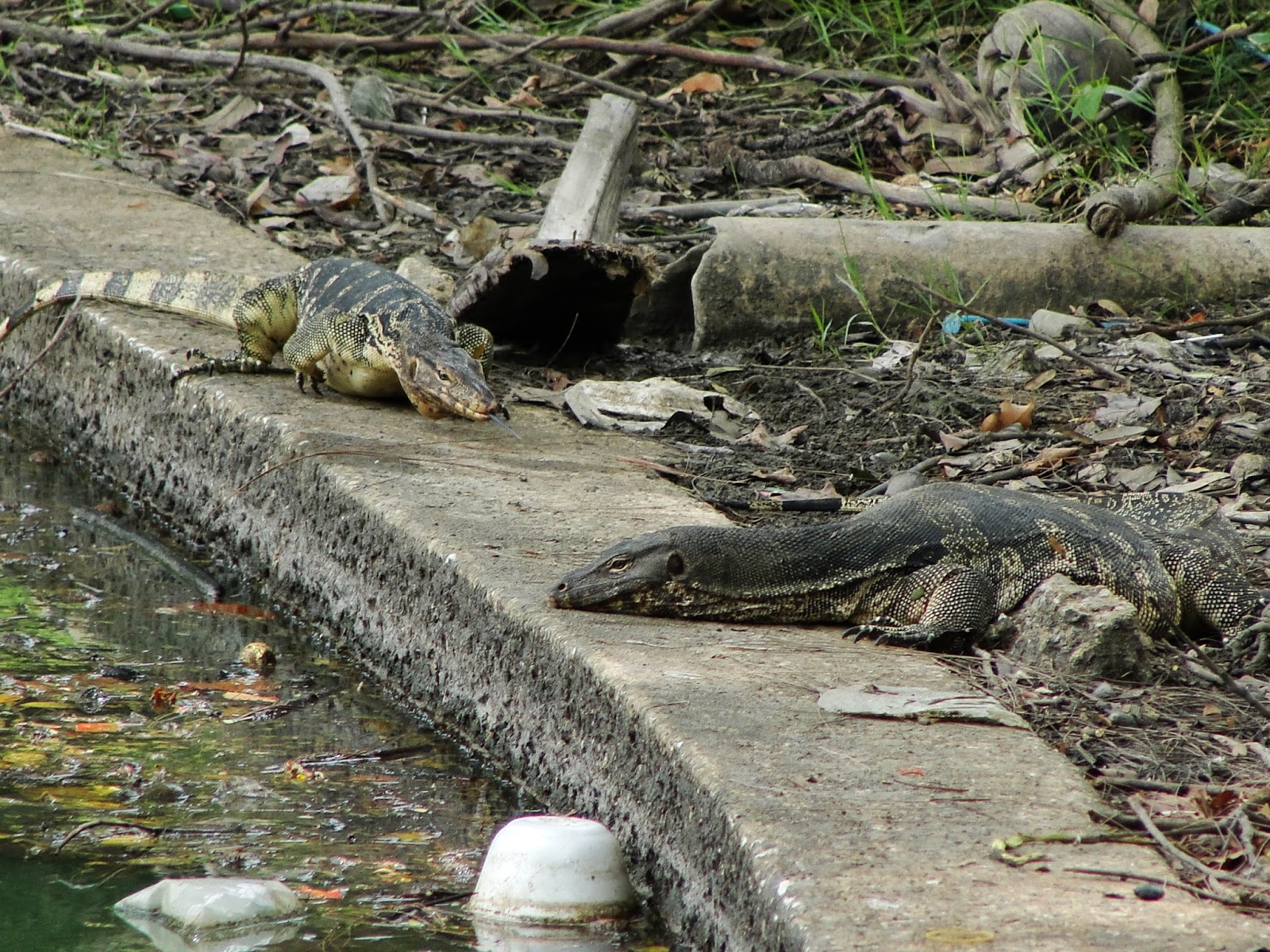
We sat in Lumphini Park and watched a couple of monitor lizards by the lake.

showdown

Yep, that's really all we did in Lumphini Park.

Big wats, big malls, big lizards - everything in Bangkok is big. Super-sized, almost. We missed the famous weekend market but we hear that's ginormous too. Leaving Friday morning we saw a great big side of the city that included heaps of traffic, sprawl, and concrete. (We had lots of time to enjoy this view while our local bus sat in an hour of traffic en route to the bus station... usually we arrive at the station hours before the bus is scheduled to depart. This time we had a whopping 2 minutes to spare.) But that's city life for you.

Food notes:
  • we did eat along Khao San road several times - the pad thai, noodle soups and rice porriges were just fine and reasonably priced...
  • ... but our favorite meal was a splurge at May Kaidee's - she also does vegetarian/vegan cooking classes and this lunch was a real treat
yam noodle stir fry for her,
green curry for him

  • fried bananas make an excellent afternoon snack
(at least we think so)

  • our Chinatown food stall dinner was alright - very small portions of kinda tasty food, the ambiance was worth it though
duck with a tiny amount of noodles, 70 baht

  • there was mango and sticky rice (no photo) and also durian and sticky rice
Patrick's favorite fruit that Jen won't miss at all

Lodging notes: we stayed at Lucky House. Not sure how lucky it was. It was small and clean-ish, though, and it had air conditioning for just a fraction more than we'd been paying for fan rooms. We got really spoiled with that air conditioning.

We got really spoiled in Thailand in general, honestly. We'll miss certain things about it but we're ready for the next phase of this journey... bumpy dirt roads, expensive food, and all. To Cambodia!

Friday, August 1, 2014

One splurge per continent: Koh Tao, Thailand.

In Canada we splurged on the TURF festival. Turkey's splurge was almost a hot air balloon ride in Göreme (cancelled due to bad weather - we gorged on figs instead). Morocco's was the desert camel ride, and Central/Western Europe's splurge was... well... Spain.

Our one-splurge-per-continent choice for SE Asia? Koh Tao.

Can't mince words here - Koh Tao in July was a hot mess. To be fair, we aren't beach people in general and it probably didn't help that we arrived right after the full moon party. By day the few shadeless, smallish shores were crowded with farangs on holiday. By night it was impossible to walk through the narrow streets brimming with oncoming motorbikes, truck taxis, Hummer-sized ATVs and tourists. There's no shortage of pub crawls, endless happy hours, western restaurants or people wearing far too little clothing. And any place that has pharmacies open until 2am... Well, that should say it all right there.

Koh Tao in a nutshell

When you're 20-something on holiday from university this all probably sounds amazing, or at least tolerable. When you're us on month 16 of extended travel... not so much. Of everywhere we've been, we took the fewest number of pictures here. The hikes on the island were hot and dusty with minimal viewponts and the beach itself was kind of pretty but offered very little shade.

ninety bazillion degrees
uphill both ways (seriously)

the beach by day

the beach by night

So why on earth did we choose this island? See, Koh Tao is THE place to go for diving certifications. Patrick got his Advanced Open Water certification several years ago in the cold waters of the Pacific Northwest. With Australia and New Zealand in our future and countless opportunities along the west coast and in Central America when we get back, crossing my certification off my "to do" list in nice warm water was a no-brainer. A pricey no-brainer, but still less expensive than most places in the world, so a no-brainer none the less.

Five days, a heck of a fin blister, 381 minutes underwater, and lots of cool fish later, we are pleased to announce that Slowly Global has expanded their travel capabilities to include the deep blue sea!

up to 30 meters, anyway
(awesome tan lines sold separately)

We did a bit of research and decided on Big Blue Diving, mainly because of their proclaimed environmental commitment and the fact that they offered either PADI or SSI training. Both courses are world-recognized and teach the same skills. I was pretty set on PADI before we even got to Koh Tao but I listened to the options presented in the orientation. What I heard: PADI has been around longer, is more structured, and costs a bit more money; SSI is more fun for the instructors to teach.

Guess which one I chose? I didn't expect to be the only one from my orientation class of 30+ people in the PADI course, but I also didn't expect to be the only one over 35 taking the course. (On the plus side, I got my own personal trainer for two days! On the con side, being solo in a mentally and physically taxing underwater course was pretty overwhelming. I did the SSI version for Advanced Open Water just to see if there was a difference. There wasn't, really, and I had five other students with me that time.)

While I was training Patrick enjoyed lots of "fun dives" around the island - also more reasonably priced here than in other parts of the world. The giant wall of barracuda was definitely a highlight for him. We even got to do two "fun dives" together on our last day. These were by far my favorite dives. No stress, no skills tests, no chaos. Just us, a nice woman from Italy, our dive master and lots of amazing fishies. We even saw an eel swimming, and that never happens!

When neither of us were underwater we holed up in the dorm and avoided everything and everyone like the plague. There were moments when it was hard to justify the money being spent and the extended stay in a place we generally didn't really enjoy, but all we had to do was talk about the fish to bring our focus back to the purpose of our mission.

Remember the jar we used to fund our Canadian National Parks Discovery Pass? We've found a new use for it: local dives to keep our skills up while we plan longer-term trips to Mexico or Honduras/Belize or wherever. And so the journey shall continue...

Food notes: everything on the island is really expensive! Bags of muesli were surprisingly inexpensive at the markets so that plus 7-11 yogurt was breakfast every day. Here are a few other ways we cut costs without skimping on taste...
  • most importantly, the 20b samosas from the guy who hangs around Big Blue Diving are pretty good - no photo available (they were gone too fast)

  • 995 Duck had really tasty noodle soups - we ate here almost every day
very reasonably priced too

  • the chicken tikki masala kebabs from Shalimar were filling and pretty tasty 
only 1000b for two

Lodging notes:
  • we stayed at Koh Tao Garden Resort our first night in town - it was a little pricey (for us) but fine, the garden was lovely, there were cute kitties everywhere and we were able to check in early (important since we got to the island around 6am)

  • our discounted dorm beds through Big Blue Diving were in their newer resort - the room was large, clean, quiet, and pretty conveniently located

Travel notes: after reading this blog post we decided to take the Porntaweesin night ferry from Chumphon to Koh Tao. For 400b per person we got two costs in one - a hard dorm bed plus transportation. It was totally fine so we did this on the way back too. We got in super-early but things are bustling by 6am in both towns so coffee and breakfast were easy to find while we killed time. Highly recommend!

cleaner than some of our recent hotels

One last stop in Bangkok (finally, Bangkok!) and then it's time for Cambodia. Can't believe our Thailand adventure is almost over...